
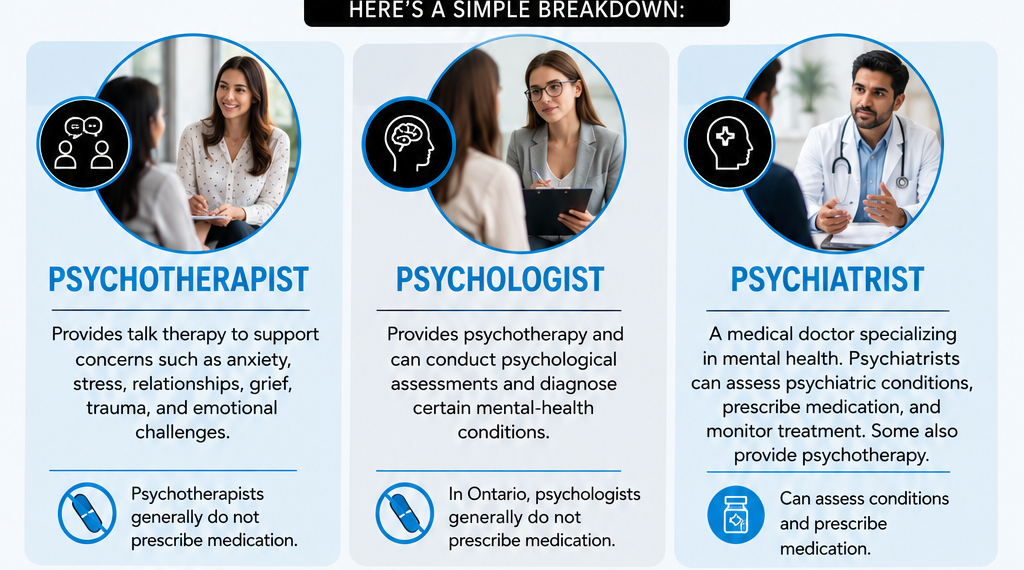
When you or someone you care about is struggling with anxiety, depression, stress, trauma, relationship difficulties, or other mental health concerns, finding the right professional can feel overwhelming. You may come across terms such as psychotherapist, psychologist, and psychiatrist and wonder: What is the difference, and which professional should I see?
Although all three professionals can be involved in mental health care, their education, training, services, and scope of practice are different.
In this guide, we explain the difference between a psychotherapist, psychologist, and psychiatrist and help you understand which type of professional may be appropriate for different mental health needs
What Is a Psychotherapist?
A psychotherapist is a trained professional who provides psychotherapy, often referred to as talk therapy. Psychotherapy gives individuals a safe and confidential space to explore their thoughts, feelings, behaviours, relationships, and life experiences.
Psychotherapists use different therapeutic approaches based on their education, training, and the needs of their clients. Depending on their training, they may use approaches such as Cognitive Behavioural Therapy (CBT), mindfulness-based approaches, trauma-focused therapy, or other therapeutic techniques.
People may work with a psychotherapist for:
- Anxiety and stress
- Depression and low mood
- Relationship challenges
- Grief and loss
- Trauma and difficult life experiences
- Self-esteem concerns
- Emotional regulation
- Life transitions and coping difficulties
The main role of a psychotherapist is to help clients understand and manage psychological and emotional difficulties through psychotherapy.
What Is a Psychologist?
A psychologist is a professional trained in psychology—the study of human behaviour, thoughts, emotions, and mental processes.
Depending on their education, registration, and scope of practice, psychologists may provide psychological assessments, psychotherapy, and other psychological interventions.
Psychologists may work with individuals, couples, families, children, adolescents, or organizations. Some specialize in areas such as clinical psychology, counselling, child psychology, neuropsychology, or behavioural health.
A psychologist may help with:
- Anxiety and depression
- Behavioural concerns
- Trauma
- Emotional difficulties
- Cognitive concerns
- Psychological assessments
- Learning or developmental concerns
- Coping and adjustment difficulties
One important distinction is that psychologists may have specialized training in psychological assessment and testing, depending on their professional credentials and jurisdiction.
What Is a Psychiatrist?
A psychiatrist is a medical doctor who specializes in mental health.
Unlike psychotherapists and psychologists, psychiatrists complete medical training and specialize in psychiatry. Their medical background allows them to assess mental health conditions while also considering physical health, medications, and biological factors.
Psychiatrists can diagnose mental health disorders and, where authorized, prescribe and manage medication. Some psychiatrists also provide psychotherapy.
A person may benefit from psychiatric care when symptoms are severe, persistent, significantly affect daily functioning, or may require medical treatment.
Psychiatrists commonly work with conditions such as:
- Major depression
- Bipolar disorder
- Schizophrenia and psychotic disorders
- Severe anxiety disorders
- Mood disorders
- Other complex mental health conditions
Psychotherapist vs Psychologist vs Psychiatrist: Key Differences
Understanding the differences can be easier when comparing their primary roles.
| Psychotherapist | Psychologist | Psychiatrist | |
|---|---|---|---|
| Primary focus | Psychotherapy and emotional support | Psychology, assessment, and psychological treatment | Medical assessment and treatment of mental disorders |
| Medical doctor | No | No | Yes |
| Provides psychotherapy | Yes | Yes, depending on training and scope | Sometimes |
| Psychological testing | Depends on qualifications | Yes, when trained and authorized | Generally not their primary role |
| Prescribes medication | Generally no | Generally no | Yes |
| Common approach | Talk therapy and therapeutic techniques | Psychological assessment and therapy | Medical treatment, medication, and sometimes therapy |
Can a Psychologist or Psychotherapist Prescribe Medication?
Generally, psychologists and psychotherapists do not prescribe medication. Prescribing authority is associated with medical professionals and is governed by applicable laws and professional regulations.
Psychiatrists, as medical doctors, can prescribe medication when clinically appropriate.
However, professional scopes of practice can vary by jurisdiction, so it is important to confirm the specific credentials and registration of a provider.
Should You See a Psychotherapist, Psychologist, or Psychiatrist?
The right professional depends on your individual circumstances and what type of support you are looking for.
Consider a psychotherapist if:
You are primarily looking for talk therapy to explore emotions, behaviours, relationships, stressful experiences, or life challenges.
Consider a psychologist if:
You are looking for psychotherapy, psychological assessment, or specialized psychological services, depending on the psychologist’s training and scope of practice.
Consider a psychiatrist if:
You may need medical assessment, psychiatric diagnosis, or medication management, particularly when symptoms are severe, complex, or significantly affecting daily life.
In some cases, people may work with multiple professionals. For example, a psychiatrist may manage medication while a psychologist or psychotherapist provides regular psychotherapy.
What Should You Look for When Choosing a Mental Health Professional?
Choosing a mental health professional is an important personal decision. Consider:
- Their education and professional credentials
- Registration with the appropriate regulatory body
- Experience with your specific concerns
- Their therapeutic approach
- Availability and location
- Cost and insurance coverage
- Whether you feel comfortable communicating with them
A strong therapeutic relationship and feeling comfortable with your provider can be important parts of the treatment process.
Frequently Asked Questions
Is a psychiatrist a psychologist?
No. A psychiatrist is a medical doctor specializing in psychiatry, while a psychologist is trained in psychology. Their education and professional roles are different.
Is a psychotherapist a psychologist?
Not necessarily. Psychotherapy can be provided by professionals with different educational backgrounds and credentials. A psychologist may provide psychotherapy, but not every psychotherapist is a psychologist.
Can a psychiatrist provide therapy?
Yes. Some psychiatrists provide psychotherapy in addition to medical and medication-based treatment, although their specific practice varies.
Who can prescribe medication?
Psychiatrists are medical doctors and can prescribe medication within their professional scope. Psychotherapists and psychologists generally do not have prescribing authority.
Is psychotherapy only for people with mental illness?
No. People may seek psychotherapy for many reasons, including stress, relationship difficulties, grief, personal growth, life transitions, coping challenges, and mental health conditions.
Final Thoughts
Psychotherapists, psychologists, and psychiatrists each have an important role in mental health care. While their responsibilities can overlap, their education, professional training, and scope of practice are different.
A psychotherapist primarily provides psychotherapy, a psychologist provides psychological services such as assessment and therapy within their scope, and a psychiatrist is a medical doctor who can provide psychiatric treatment and prescribe medication.
If you are unsure which professional is right for you, speaking with a healthcare provider or qualified mental health professional can be a helpful starting point.
You don’t have to navigate mental health challenges alone. The right professional support can help you better understand what you’re experiencing and identify appropriate ways forward.
Disclaimer: Professional titles, registration requirements, and scope of practice may vary by province or territory and by the individual’s specific credentials. This article is for general educational purposes and is not a substitute for professional medical or mental health advice.